

The engine is smoking
3 Types of Engine Smoke: Causes, Risks, and XADO Solutions
 By the colour of the exhaust smoke, it is possible to determine what’s wrong with your car:
- The engine smoke is blue. Possible reasons include wear of the cylinder‑piston group, valves, valve guides, valve stem seals, sticking of piston rings due to carbonisation, worn turbine bearings or seals, and absence of spark in one of the cylinders due to malfunction of the electric circuit.
- The engine smoke is white. Possible reasons include moisture in the engine and exhaust system, and improper functioning of the cooling system. Light smoking by cold start, especially in winter, is considered normal. If the smoke continues even after warming up to operating temperature, take the car to a service station. For more background, see the AA’s guide on white smoke from exhaust.
- The engine smoke is black. The exhaust smoke can be black due to improper functioning of the fuel system. In this case, it is necessary to take the car to a service station.
 Suggestions
Decarbonization of piston rings may be conducted with the help of XADO RED Anti Carbon – Engine Decarboniser Spray or Verylube Anticarbon Engine Cleaner, which is introduced into the engine cylinders through spark plug holes.
By adding VitaFlush – Oil System Cleaner into the motor oil, you can clean the whole oil system.
To increase oil viscosity and reduce smoke, it is recommended to use Atomex Complex Oil Treatment.
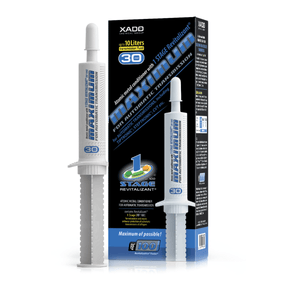
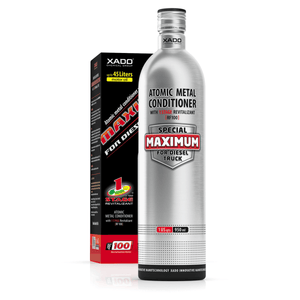
The engine should be treated with XADO RED Booster Comprehensive Engine Oil Additive, Atomic Metal Conditioner Maximum with 1 Stage Revitalizant® or 1 Stage Engine Revitalizant® for gasoline and diesel engines.
By introducing Revitalizant® in the engine, surface defects on the cylinder bore are removed. The geometry of parts is restored, increasing cylinder compression, improving clearance sealing, and decreasing oil consumption and smoking.
XADO Anticarbon Engine Cleaner is a fast‑acting product designed to remove carbon pollution and restore stuck piston rings of gasoline and diesel engines. It removes scale and tar deposits from the cylinder‑piston group and does not require an oil change after application.
Properties
- Reduces exhaust emissions
- Removes sediments from spark plugs
- Decreases engine noise
- Equalises compression in cylinders
- Cleans cylinders, pistons, combustion chambers, and valves
- Reduces oil consumption
- Restores mobility of stuck piston rings
Application
- Warm up the engine (warm but not hot).
- Unscrew the spark plugs. Disconnect ignition timing sensor, Hall device, and commutator.
- Spray the content (5 sec) into each cylinder alternately through a nozzle hose. Screw plugs back in. Wait 10–20 minutes. Unscrew plugs again. Cover plug holes with absorbing fabric to avoid dirt flying out. Rotate the engine with the starter for several seconds.
- Replace spark plugs.
- Start the engine and run at moderate RPM for up to 15 minutes. Softened carbon deposits will be expelled through the exhaust system.
Note
Avoid getting the substance onto lacquer coatings. The product is safe for catalytic converters, oxygen sensors, mechanical rubber parts, and sealings.