

How to Pass MOT Emissions First Time | Additives, Driving Tips & Maintenance
Failing an MOT emissions test is frustrating, but most failures come down to a few predictable causes: dirty injectors, carbon build‑up, weak compression, or a partially blocked DPF. The good news is that these issues can often be corrected quickly and safely using targeted additives before your retest.
This guide explains the main reasons petrol and diesel vehicles fail MOT emissions, how to diagnose the symptoms, and which XADO solutions are most effective for reducing CO, HC and smoke levels.
1. Why Cars Fail MOT Emissions
Most MOT emissions failures fall into one of these categories:
- High CO (Carbon Monoxide) – caused by incomplete combustion, rich mixtures, carbon build‑up.
- High HC (Hydrocarbons) – unburnt fuel due to poor atomisation or weak ignition.
- Lambda imbalances – indicating an incorrect air-fuel ratio. A high reading (>1.03) usually points to exhaust leaks or sensor faults, while a low reading (<0.97) suggests a rich mixture.
- Smoke opacity (Diesel) – injector wear, poor spray pattern, or DPF loading.
- Low compression – blow‑by gases increasing emissions and reducing combustion efficiency.
- DPF issues – partial blockage or incomplete regeneration cycles.
For deeper reading, see:
- High HC (Hydrocarbons) MOT Failure
- Failed MOT on Smoke (Diesel & Petrol)
- Failed MOT Emissions? High CO & Smoke
- 8 Reasons Cars Fail MOT on Emissions
2. Petrol MOT Emissions Failures (CO & HC)
Petrol engines commonly fail due to:
- Dirty injectors
- Carbon build‑up on valves and pistons
- Weak compression
- Incorrect air‑fuel mixture
Recommended solutions:
- Atomex Multi Cleaner Petrol – cleans injectors and restores spray pattern.
- XADO Red Flush – deep engine decarbonisation.
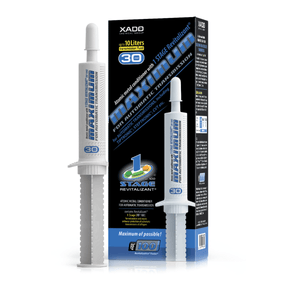
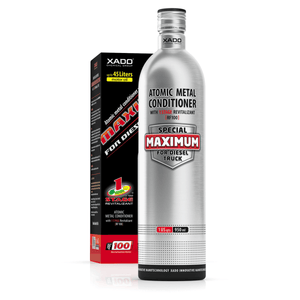
- XADO 1 Stage Revitalizant – restores compression.
- XADO EX120 Petrol – stabilises compression and reduces blow‑by.
3. Diesel MOT Emissions Failures (Smoke & DPF)
Diesel engines often fail due to:
- Poor injector spray pattern
- Excessive soot production
- DPF loading or incomplete regeneration
- Low compression
Recommended solutions:
- Atomex Multi Cleaner Diesel – reduces smoke and restores injector performance.
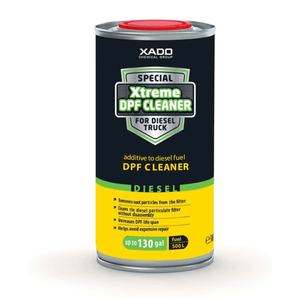
- XADO DPF Cleaner & Restorer – supports regeneration and reduces opacity.
- XADO 1 Stage Revitalizant – improves compression.
- XADO EX120 Diesel – stabilises compression and reduces blow‑by.
Preparing for your MOT retest?
Explore the full range of targeted additives designed to reduce CO, HC and smoke levels.
View MOT Emissions Solutions
Explore the full range of targeted additives designed to reduce CO, HC and smoke levels.
View MOT Emissions Solutions
4. How to Prepare Your Car Before the MOT
- Warm the engine fully before the test.
- Use a high‑quality fuel system cleaner.
- Ensure the oil is clean and at the correct level.
- Drive at motorway speeds to clear soot (diesel).
- Use compression‑restoring additives if the engine is worn.
5. How to Use Fuel Additives for an MOT
Timing and concentration are key to passing the emissions test. For the best results, do not just pour the additive into a full tank.
- Wait for low fuel: Wait until your tank has approx. 20–30 litres remaining (about a quarter tank).
- Add the cleaner: Pour the additive in before filling up to ensure it mixes thoroughly.
- Drive firmly: Drive for roughly 30–50 miles at varying revs. This creates a higher concentration of cleaning agents, effectively targeting dirty injectors and combustion chambers.
- Top up: Fill up with fresh fuel right before driving to the test centre to dilute any remaining mixture slightly.
6. When Additives Can Help — and When They Can’t
Additives are highly effective for:
- Dirty injectors
- Carbon build‑up
- Borderline compression
- DPF loading
They cannot fix:
- Severe mechanical damage
- Major injector failure
- Large vacuum leaks
- High Lambda readings caused by exhaust leaks
- Faulty sensors (O2, MAF, MAP)
If your emissions failure is caused by wear, deposits or injector issues, the products in this guide can make a significant difference before your retest.
Prepare Your Car for Its MOT Emissions Test
These targeted additives help reduce CO, HC and smoke levels while improving combustion efficiency. Choose the right solution for your petrol or diesel engine and give your vehicle the best chance of passing first time.
Shop MOT Emissions Solutions