

Failed MOT Emissions? How to Reduce High CO and Smoke Without Expensive Repairs
There are few things more stressful for a UK driver than the mechanic handing you a red refusal sheet. MOT Fail.
If your car failed on emissions (High CO, Hydrocarbons, or Smoke), the mechanic usually suggests a painful solution: replace the Catalytic Converter, the DPF, or even the injectors. These repairs can easily cost £400 to £1,000+.
But here is the secret most garages won’t tell you: High emissions are often caused by dirt and wear, not broken parts.
Before you spend hundreds on new hardware, you can often fix the chemistry of your engine for a fraction of the price. In this guide, we’ll explain why your car failed and how to use advanced ceramic restoration technology to pass the re-test.


Decoding Your MOT Fail Sheet: What Went Wrong?
To fix the problem, you first need to know what the numbers mean. Look at your emissions printout or check the official GOV.UK MOT guide.
For more guidance, see our full Problem Solving Guides.
- High CO (Carbon Monoxide): This means incomplete combustion. Your engine isn't burning the fuel efficiently. This is often caused by dirty fuel injectors or carbon deposits on valves.
- High HC (Hydrocarbons): This is unburnt fuel or oil entering the exhaust. If your car is older, this often points to worn piston rings allowing oil to slip into the combustion chamber (often accompanied by blue smoke).
- Lambda Reading: This measures the air-to-fuel ratio. If this is out of balance (outside 0.97 - 1.03), your oxygen sensors or exhaust system might have a leak or blockage.
The Problem with Standard "Injector Cleaners"
You might be tempted to grab a £5 bottle of generic additive from the petrol station. The problem? Most of those products are just solvents.
Think of them like dish soap. They might wash away a little bit of surface grime, but they cannot fix mechanical wear. If your emissions are high because your engine has lost compression due to friction and age, a simple solvent will do nothing.
The XADO Difference: Repair, Don't Just Clean
This is where XADO is different from brands like STP or Redex. We don't just sell cleaners; we sell Revitalizants.
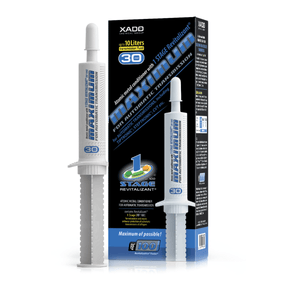
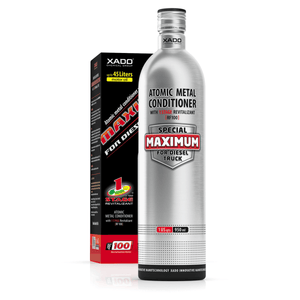
Our patented Revitalizant® technology contains a ceramic-metal building block. When added to your engine, it reacts with friction and heat to form a cermet (ceramic-metal) coating on worn surfaces.
- It Restores Geometry: It rebuilds worn piston rings and cylinder walls.
- It Increases Compression: This stops oil blow-by (the cause of high Hydrocarbons).
- It Optimises Combustion: Fuel burns cleanly, drastically lowering CO readings.

Which Solution Do You Need?
Don't guess. Use this guide to pick the exact treatment for your specific MOT failure.
Step-by-Step: How to Pass the Re-Test
Once you have your XADO product, follow this "Mechanic’s Trick" to give yourself the best chance of passing:
- Concentrate the Mix: Add the fuel additive to a tank that is only ¼ full. This creates a super-concentrated cleaning solution.
- The "Italian Tune-Up": Take the car to a motorway. Drive at high RPM (3,000+ revs) in a lower gear (e.g., 3rd or 4th gear) for 15–20 minutes. This gets the Catalytic Converter scorching hot.
- Arrive Hot: Do not let the car sit and cool down before the re-test. Book your appointment so you can drive straight into the bay with a hot engine.
Perform an Italian Tune Up
An Italian clean‑up (or Italian tune‑up) is when you drive the car at high RPM for an extended period to raise exhaust temperatures. The goal is to burn away carbon and soot that may be restricting the catalytic converter or other exhaust components.
This practice comes from older Italian sports cars that needed to be driven hard to stay clean internally. It is effective and it works.
Real Drivers, Real Results
We have helped thousands of UK drivers avoid scrapping their cars.
"My Audi A4 failed on smoke levels of 1.98. I added XADO 1 Stage and the Complex Fuel Cleaner, drove it for 100 miles, and re-tested. It passed with 0.45. Saved me £800 on a new turbo."
FAQ: MOT Emissions Fixes
Why did my car fail MOT emissions on CO?
High CO usually means incomplete combustion caused by dirty injectors, carbon buildup or poor fuel burn.
Can additives really help me pass an MOT emissions test?
Yes. If the issue is carbon buildup or low compression, advanced treatments can restore combustion efficiency and reduce emissions.
What is an Italian tune-up?
It’s a high‑RPM drive that heats the catalytic converter enough to burn off carbon and soot before a re-test.
Do I need a new catalytic converter?
Not always. Many failures are caused by deposits or wear, not a broken catalytic converter.
What you’ve learned
In most MOT emission failures, the underlying cause is carbon buildup, poor combustion, or worn engine components — not a broken catalytic converter or DPF. By restoring compression, cleaning the fuel system, and heating the exhaust properly, most vehicles can pass the re-test without expensive repairs.
Conclusion: Don't Scrap It, Revitalize It
A failed MOT doesn't have to mean an expensive repair bill. Whether it's a simple carbon blockage or advanced engine wear, XADO’s technology attacks the root cause of the emissions.
Ready to pass your test?
Shop Petrol Fixes Shop Diesel Fixes